Interview with
CEO Rolf Habben Jansen
External content (Cloudflare Stream) will be loaded. Data may be transferred to servers outside the EU. By clicking “Accept”, you consent to this data transfer.
Michael Kastl, Managing Director Treasury, Finance & Investor Relations, in conversation with the CEO of Hapag-Lloyd AG about the company’s business performance in 2025
Michael Kastl: Rolf, how do you assess the 2025 financial year?
Rolf Habben Jansen: Given the challenging market environment, we can be satisfied with our performance in 2025. Despite geopolitical tensions and the dynamic nature of global trade, we increased our transport volume by 8% – and with a Group EBIT of one billion euros, we came in at the upper end of our initial expectations for the year. This once again demonstrates our economic strength. In addition, we were able to set a new schedule reliability benchmark through our Gemini network and improve our customer satisfaction to a record level. To appropriately share the company’s success with our shareholders, the Executive Board and Supervisory Board will propose a dividend of EUR 3.00 per share to the Annual General Meeting. This corresponds to a payout ratio of 57% of the Group’s annual net profit.
How did the geopolitical environment affect business performance?
In 2025, there were significant geopolitical uncertainties and global trade tensions. The new U.S. tariff policy, weather-related disruptions to supply chains, significant fluctuations in cargo volumes, as well as the tense security situation in the Red Sea, posed major challenges for our industry. At the same time, global trade remains robust. Trade flows are shifting and new routes are emerging – and this is precisely where our strength lies. With our broad global network and a modern fleet, we were able to respond flexibly and provide reliable service to our customers. In particular, the hub-and-spoke model of our Gemini network has helped us become more efficient and reduce port times. As a result, even under difficult conditions, we achieved a schedule reliability of 90% in 2025 – a figure that sets a new benchmark across our entire industry. With the recent escalation of the conflict in the Middle East, however, we once again have to navigate new challenges. As always, the safety of our colleagues, vessels, cargo, and operations remains our top priority.
What other strategic progress was made in 2025?
We continued to consistently implement our Strategy 2030 and focused on our core business in container shipping and the systematic expansion of our terminal activities. With Hanseatic Global Terminals, we consolidated our global terminal business and expanded the portfolio in 2025 – including through a majority stake in a terminal in France and an agreement on a joint venture to build a new terminal in Brazil. We also made very good progress in liner shipping, achieving record levels of customer satisfaction and significantly improving our digital offering, for which we were recognized as a leading provider in digital customer experience. At the same time, we continued to modernize and decarbonize our fleet. With the deployment of the final Hamburg Express Class vessels, we are setting new standards in efficiency and sustainability. By the end of the decade, around 50 vessels in our fleet will be equipped with alter native propulsion. Additionally, we are strengthening our competitiveness and accelerating our organizational transformation by migrating IT systems to the cloud, expanding the use of artificial intelligence, and implementing a comprehensive cost reduction program.
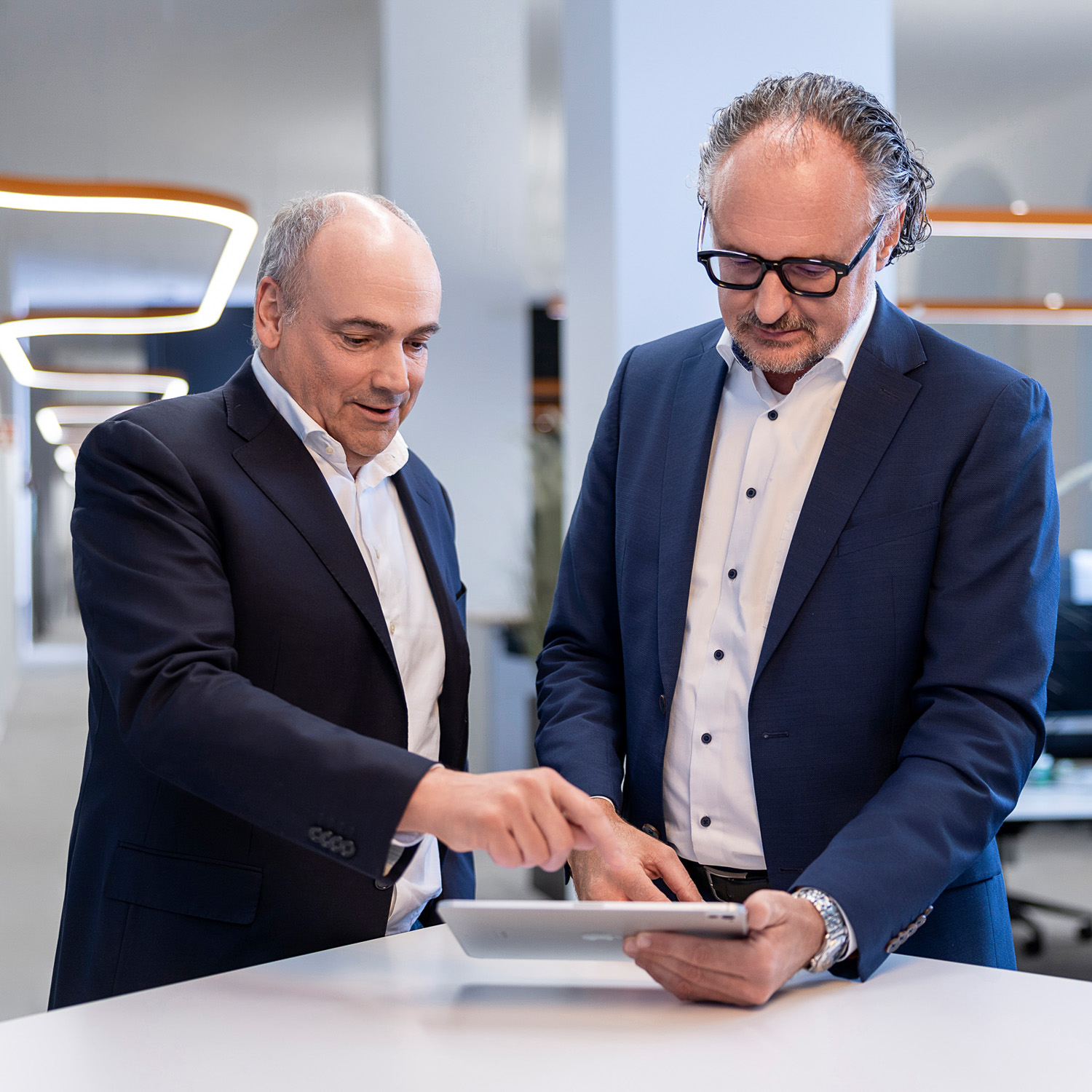
“Gemini set a new industry benchmark for schedule reliability”
Rolf Habben Jansen, CEO
How confident are you about the current financial year?
The situation today is probably more uncertain than ever, as the geopolitical environment continues to be complex and container shipping remains a highly competitive industry. For liner shipping – despite increasing transport volumes, our focus on quality, and very strong schedule reliability – we expect a decline in operating results. This is mainly due to slower market growth, additional capacity influx, lower freight rates and geopolitical pressure. We will be able to partially offset these effects through cost savings. In the Terminal & Infrastructure segment, we expect improved results driven by efficiency gains, synergies, and positive effects from acquisitions. Thanks to the expertise and dedication of our employees, we will continue to work step by step toward our goals this year.
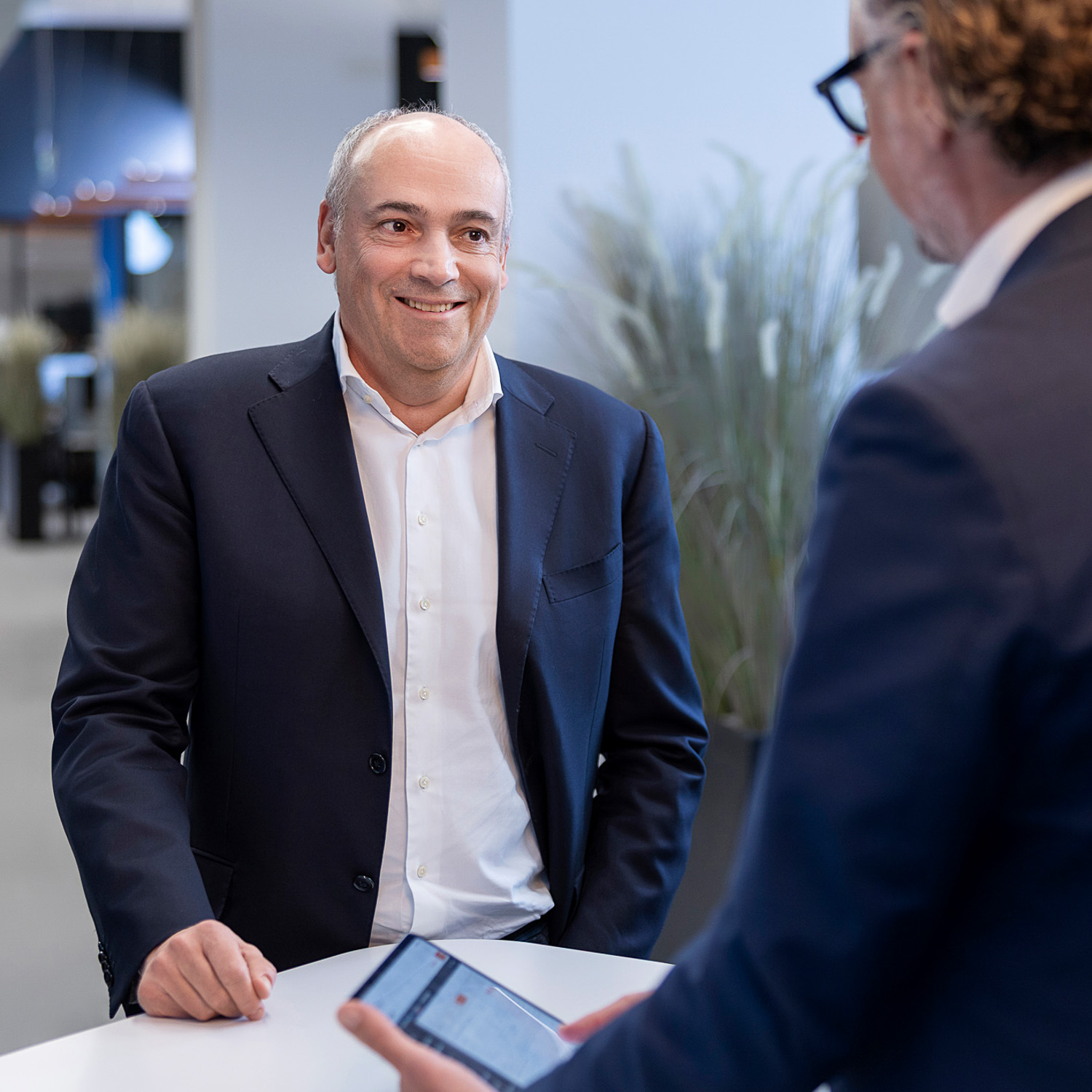
“Quality, sustainability, and efficiency will remain our focus”
Rolf Habben Jansen, CEO
What significance would a merger between Hapag-Lloyd and ZIM have in light of the challenging market environment?
The signed agreement to merge with ZIM is a strategically important step that would allow us to bundle our strengths. The combined company would have a capacity of more than 3 million TEU, operate more than 400 modern vessels and transport more than 18 million TEU annually. This would secure our position as the world’s fifth-largest liner shipping company. Our customers would benefit from a stronger network across all major trade routes and improved connectivity. We expect annual synergies of several hundred million U.S. dollars. At the same time, it’s clear that such a transaction also comes with responsibility: we want to combine the strengths of both companies – highly qualified employees and modern technologies – and form an even stronger team. However, it’s important to note that the transaction is subject to approvals by ZIM shareholders and the relevant authorities and we remain competitors until it’s closed.
Where will further priorities lie in the current financial year?
Quality, sustainability, and efficiency will remain our focus. We aim to further improve our operational performance, expand our digital offerings, and increase transparency along the transport chain. At the same time, we will continue to fulfil our environmental responsibilities and invest in our fleet to further decarbonize it, with the goal of achieving net-zero fleet operations by 2045. In addition, we will continue to develop our organization and expand our capabilities, as long-term success is built on strong teams. We want to continue growing profitably and provide outstanding quality to our customers. At the same time, we must become more competitive in terms of unit costs: initial successes are already visible, as savings from our Gemini network are kicking in. For our shareholders, we aim to create value while remaining a reliable partner for customers, employees, and society. I would especially like to thank our 18,000 employees worldwide. Through their commitment and professionalism, they have kept Hapag-Lloyd on a successful course.